

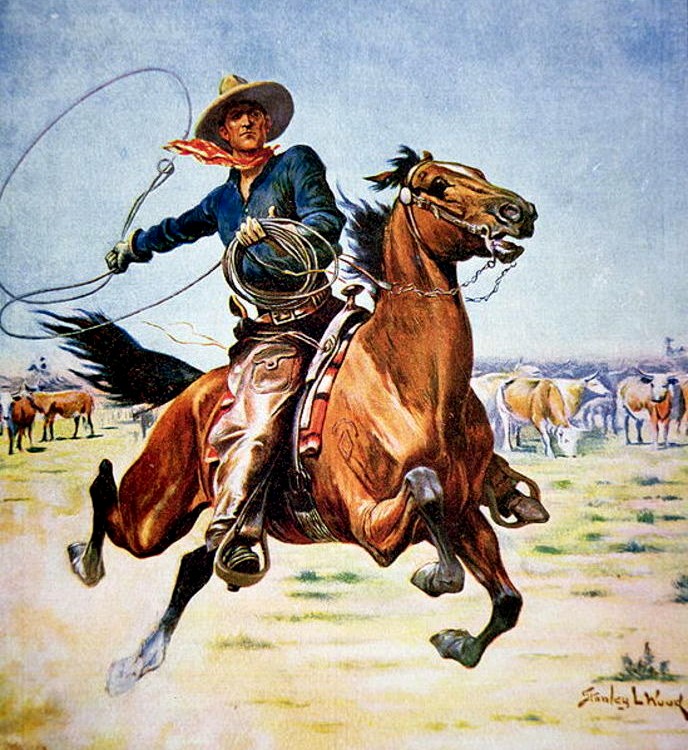
I first started studying Westerns when I was a history student studying the West. By the 1960s there was a broad body western movies, starting with silent films and going through the kiddie westerns of the 1920s, the more adult westerns of the 1940s and 1950s, and into the start of some of the Anti-Hero westerns of the late 1960s. I wanted to study the mythology and lore of the West, both in the past and in the present, and started studying not only films but also literature, going back as far a Moore’s Utopia and Rowlandson’s Narrative, into the James Fenimore Cooper series, the Dime novels of the later 19th century, and then on into movies of the 20th century.
There is a LOT going on in Western films and literature, much to enjoy, but also much to learn about attitudes and stereotyopes of the frontier. For both better and worse, the cowboy image has become the default icon of the typical American throughout the world during most of our history. And while it has softened a bit recently, The poopularity of Yellowstone, and Kristi Noeme’s cowboy hat garb suggests the image still carries a great deal of power. It is a divisive figure at times, but it remains relevant.
I will be looking at films from the past and about the past, but Westerns rate as a separate category. I will be posting here occassionally, focusing on different topics and themes. I will also wander into books and TV shows, and even into art and photography. This is a fascinating topic, and I hope you will enjoy these postings.
PART 01: A few of the best . . .
These four are a bit of a grab bag, but each is incredibly interesting in the way it portrays and plays with the basic themes of the western genre.
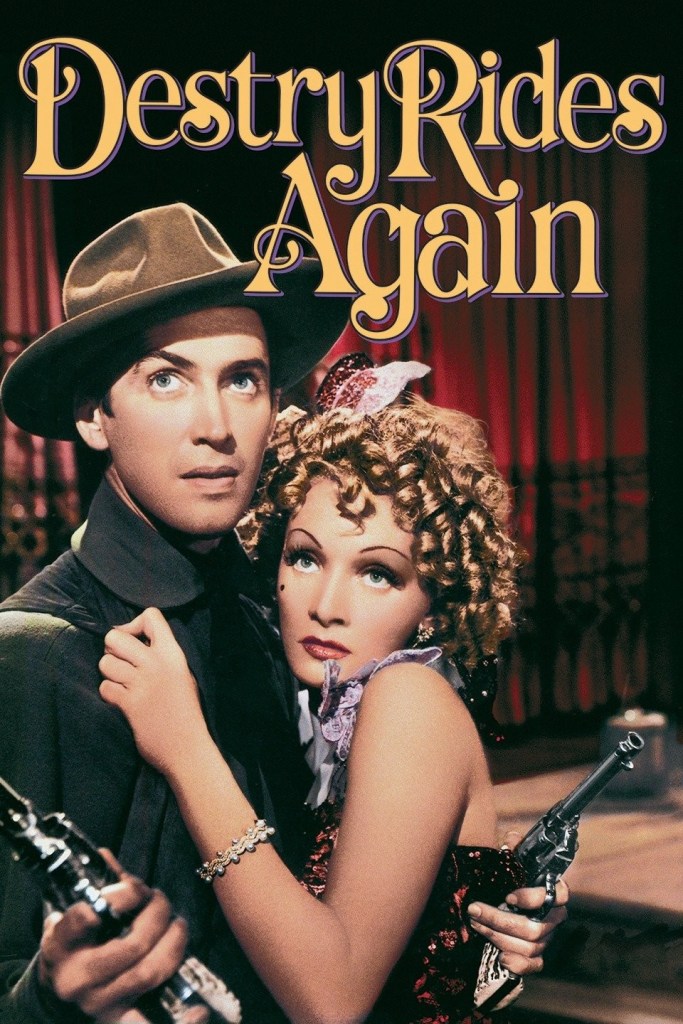
Destry Rides Again (1939)
From the title itself there is a kind of sense of a lost time before the present. This is not a sequel, though James Stewart’s Destry is reminded throughout the film of how great a lawman his father was, and is constantly being measured against that. This film, like so many westerns, seems to contrast the present as weak to a heroic (and violent) past. The easy way to end it all would be to conclude that those old values are out of date. But slowly, this film works its relentless logic on Stewart’s Destry until he is forced to become the hero of old.
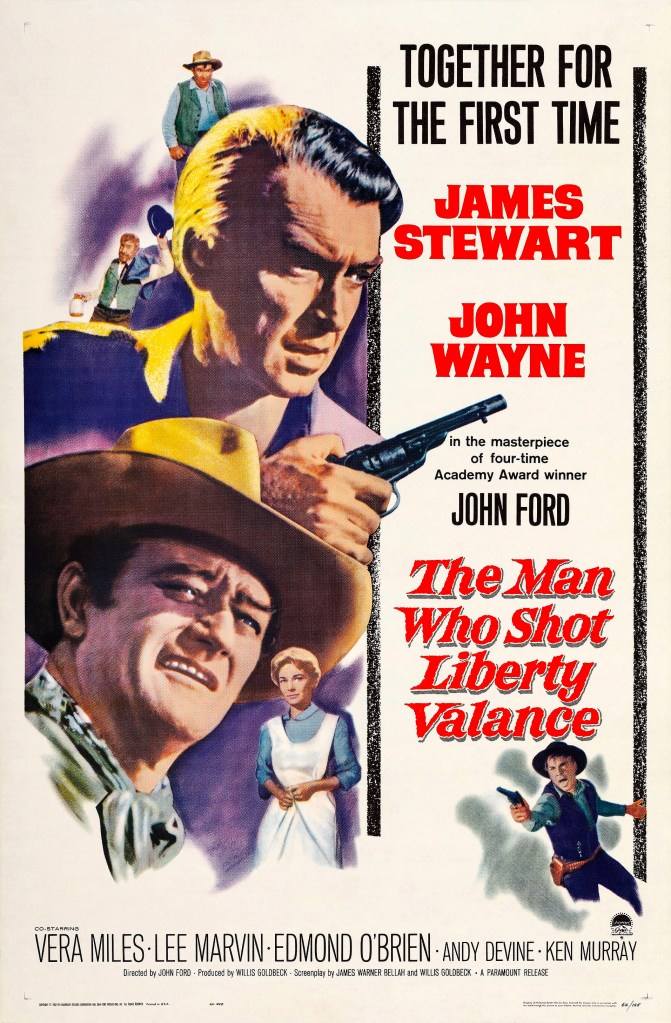
The Man Who Shot Liberty Valance (1962)
Again, this western compares the heroic past to the less morally certain present. In this case, Stewart again plays the reluctant hero, but the past is not dead–it is very much alive with John Wayne as the rough western hero, and Lee Marvin as the psycopathic villain Liberty Valance. This time, though, Stewart’s rise is more troubled, while Wayne’s hero is also more problematic. The ending line, spoken by the editor, should be a classic epitaph for all western literature and movies. “This is the West, sir! When the legen becomes fact, print the legend!” How real was our vision of the American past? Does it actually matter, if we chose to believe are myths instead of realities?
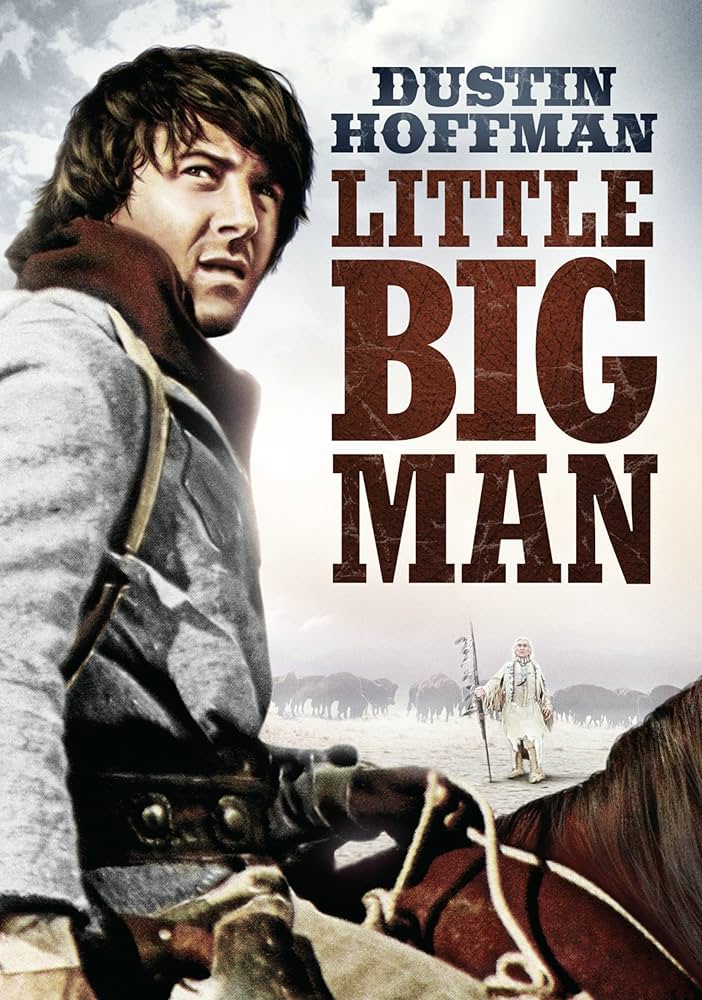
Little Big Man (1970)
Little Big Man, based on the novel by Thomas Berger, is often seen as one of the earliest anti-westerns. It seems to turn the whole story of the western myth upside down. Hoffman shifts back and forth between white and native societies, belonging to neither, forced to view the absurdities of the frontier myth. The book and film go even farther, however. The original “historic” theory of the frontier was written by Frederick Jackson Turner, who noted that the frontier was a parade of development, from fur trade to cowbut to farmer to civilization. In this western, Hoffmen starts in civilizatiion, and the film keeps pushing him backwards, into a earlier stage of the frontier, until he finally confronts the truth, and presents it very directly to one of America’s most dubious frontier heros: George Armstrong Custer.
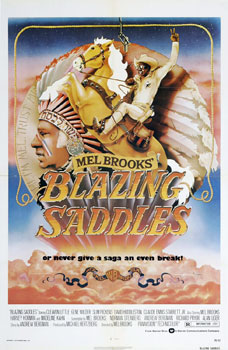
Blazing Saddles (1974)
Okay, did I lose you here? Well, read on. Blazing Saddles is perhaps one of the most insightful westerns ever produced. It comes across as a farce, as a series of very crude jokes and antics that hardly even hold together as a real plot. Mel Brooks was clearly sending up the Western genre in every way possible. BUT . . . he does so with incredible skill and with deep insights into the western genre. He pokes fun at the heroic elements of the west, but not so much because they are foolish, but because they are racist to the core. Blacks and Natives play only stereotypes in nearly every western, and in this case Brooks gioves them a powerful response. That the film breaks the fourth wall and literally runs amok through Hollywood is great commentary of the power of westerns. In the end, when the villain goes into a theater to see himself killed on the screen, the tangled plot and cause and effects of the western genre and its impact on society becomes its own mobius strip of fantasy and reality.
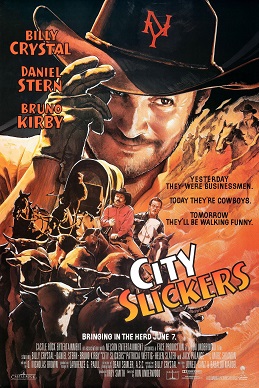
City Slickers (1991)
This is a comedy, and like Brooks seems to be sending up the western for ridicule, except . . . it turns into Destry Rides Again! Billy Crystal goes west to find himself. It is not only a standard western trope, but it is practically Theodore Roosevelt’s experience in the West of the late nineteenth century, when he seeks solace in a western ranch after the death of his wife. Again there is the western hero, this time Jack Palance, who somehow wonderfully mixes both th ebest and the worst of the western hero into one person. When Crystal must step in to bring in the herd, he has become the new Destry, the new hero for the modern age. Maybe the stakes are smaller for history in this case, but they remain as critical as ever on the scale of a single person.
What do you think? What are some of your favorite Westerns, and why? Let me know, email me ar myhistorynotes@gmail.com

 My History Notes