

I have sometimes been asked what my favorite books on History are, and these are usually among the books I reccommend. Most of them are large, but when you get a great book, who wants it to end?
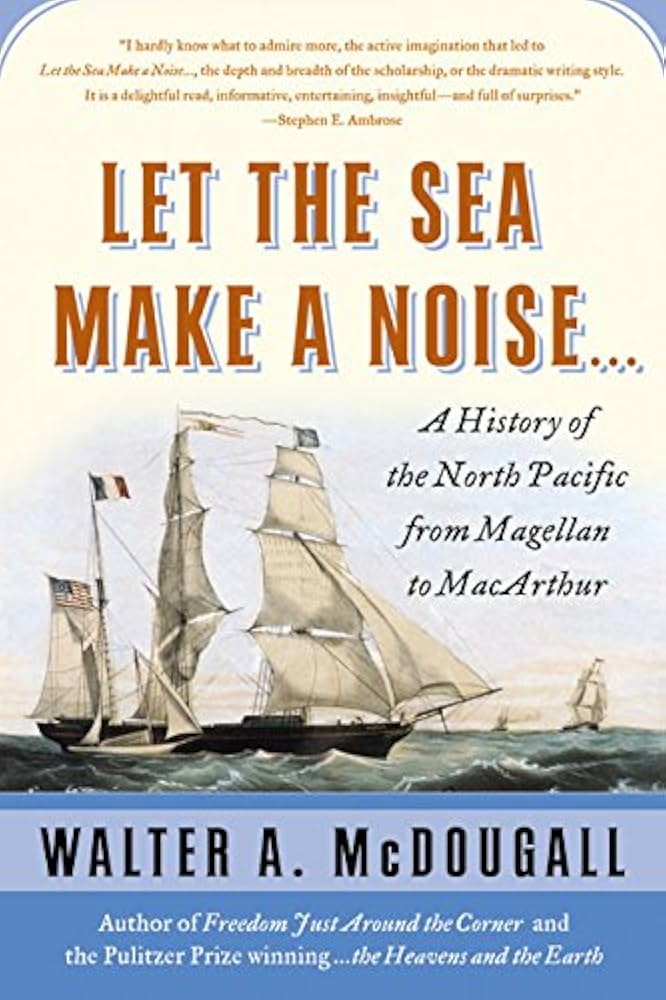
Walter McDougall, Let the Sea Make a Noise . . .
This is one of the most delightful history books I have ever rread. I found this just as I was finishing my graduate work on the American frontier and expansion, and it struck me that traditional books on the American frontier only tell half the story! McDougall is a diplomatic historian, who sees the history of the North Pacific primarily from the viewpoint of Spain, Russia, China, Japan, Britain, and the United States. This book is written like a novel, with succinct chapters that are fascinating, and covering much that impacts American history that is rarely condsidered at all. I highly reccommend this book to anyone! It is a rare treat!
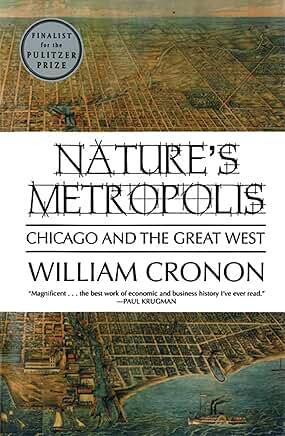
William Cronon, Nature’s Metropolis
This book is eye-opening, and may shift your perspective an American history significantly. It is not as enjoyable a read as McDougall, and there are times and places where it is a bit of a slog. But it very much rewards a close read. I suggest that you start with the middle chapters on corn and meat and lumber. Each is essentially a stand alone story. Then you may want to look back at the opening chapters, on the Geography of Capitalism–this tends to be somewhat theoretical, but it then makes the middle chapters pop! Then the final section begins to make sense. Warning: this book has been criticized for not having individual people in it, and though that is not true, I get the concern. But work your way through it, and American history will look very different ever after!
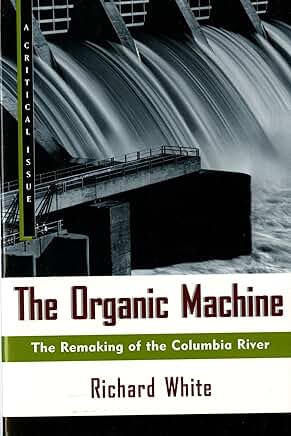
Richard White, The Organic Machine
A small book, the smallest on this list. But don’t let that fool you. It packs a whallop! Each page, it seems, has new insights into history and how our society views the world. The book focuses on the history of the Columbia River in the Pacific Northwest. It examines how different groups over the last two centuries have looked at the river, interacted with it, and shaped it as well as themselves in the process! Again, read this book about the COlumbia, but walk away looking at all rivers and American history very differently!
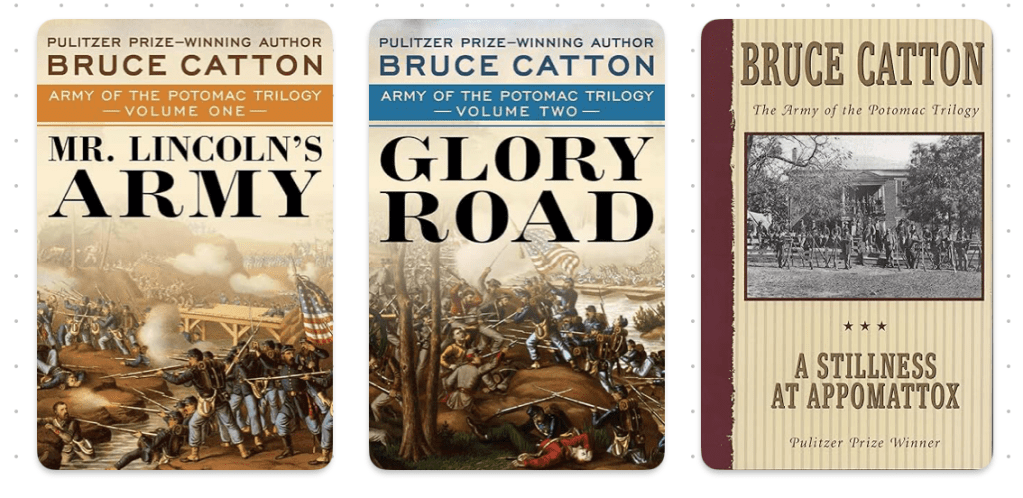
Bruce Catton, The Army of the Potomac trilogy
This trilogy, written back in the 1960s around the time of the Civil War centennial, is a masterpiece. Each book essentially follows one year of the war from the perspective of the Army of the Potomac, the main Union army in the East. It does not deal with the confederate story, but sees the war through the men and officers of the Union forces. There is no Lost Cause fake history here. The interpretation of the past and the details of the experience are strong. modern, and relevant. But the true power here is in the language. Catton’s prose paints clear and powerful images, raises serious moral issues, and leaves you feeling you are reading a modern Iliad or Odyssey. Some of the language is a bit dated, reagarding slavery and African Americans, but the value of the overall story remains strong.
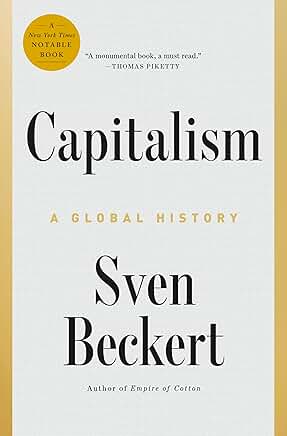
Special Note: Sven Beckert, Capitalism: A Global History
Okay, I probably should not really include this here at this moment, as I am only about half-way through reading it. But it strikes me as superb from the first pages. It is a huge volume–nearly 1400 pages! But it does a fantastic job! Beginning about the year 1000, Beckert follows the evolution of Capitalism from marginalized traders along what we have come to see as the Silk Road to their emergence as a force of nature in the aftermath of the “discovery” of the Americas, the new work and capital systems that develop in the Caribbean, and their expansion through the Industrail Revolution. Beckert shows that Capitalism is a system that was created, that emerged in various places and in different ways, but which has come to dominate the social and political systems of the world beyond its economic power. Again, read this book, and you will never quite see American history the same way again.
Do you want suggestions for books in your favorite era? Do you want to recommend a great history book?
Contact me at myhistoryoffice@gmail.com

 My History Notes